Early in the 21st Century, THE TYRELL CORPORATION advanced robot evolution into the NEXUS phase - a being virtually identical to a human - known as a Replicant. The NEXUS 6 Replicants were superior in strength and agility, and at least equal in intelligence, to the genetic engineers who created them.
Replicants were used Off-World as slave labor, in the hazardous exploration and colonization of other planets. After a bloody mutiny by a NEXUS 6 combat team in an Off-World colony, Replicants were declared illegal on earth - under penalty of death.
Special police squads - BLADE RUNNER UNITS - had orders to shoot to kill, upon detection, any trespassing Replicant.
This was not called execution.
It was called retirement.
Directed: Ridley Scott (The Martian, Gladiator, Alien, American Gangster, Kingdom of Heaven, Black Hawk Down, & so much more)
Original Novel by: Philip K. Dick (Do Androids Dream of Electric Sheep)
Writers: Hampton Fancher & David Peoples (Unforgiven, 12 Monkeys),
Original Score: Vangelis (Chariots of Fire, Alexander)
Cinematographer: Jordan Cronenweth
Editor: Marsha Nakashima & Terry Rawlings (Alien, Chariots of Fire)
Production Designer: Lawrence G. Paull (Back to the Future, Predator 2)
Genre: Action, Drama, Sci-Fi
MPAA Rating: R, For violence
Starring: Harrison Ford as Rick Deckard
Rutger Hauer as Roy Batty
Sean Young as Rachael
Edward James Olmos as Gaff
Plot
LOS ANGELES
NOVEMBER, 2019
Earth has been ravaged by nuclear war and placing nearly every animal species into endangerment or extinction. The planet is barely hospitable, save for these pockets of hyper condensed habitation. Ex-detective Rick Deckard was a Blade Runner in the past, and is about to be tasked with a retirement job that becomes much more complicated than he could've ever anticipated. A very brief but important subplot follows the Replicants, exploring exactly why they came to Earth in the first place.
The world of Blade Runner is not a welcoming place, and neither are its people. As the movie progresses, you'll see more and more depravity and violence unfold before you. However none of this is the focus of the film at all, it simply exists. Blade Runner is a movie about humanity more than anything else. Its message is deeply philosophical and asks the viewer to draw a moral conclusion. While the movie is a piece of art to watch, you will not get much of the Action that the genre leads you to believe. Instead you will be pulled into a dark Neo-Noir / Sci-Fi with even darker implications and sins that are reflected in every facet of the setting.
I'll also make one more note before going on: This is a review of the 2007 edition of the movie. This version is the best one overall, and it is canon. If you must watch another edition, I recommend the 1992 Director's Cut, as the theatrical release has a much worse ending and an unnecessary narration from Deckard throughout the film.
Soundtrack & Score
As far as I am aware, there is no licensed music that has been placed into this movie except for a single song IMDb claims exists. In all my viewings I cannot for the life of me place it, so the soundtrack doesn't get a grade. The score however...
Vangelis was famous in his time for creating music using only electronics, a bit of a pioneer in cinema in that regard. Blade Runner is by far his best work. I do not know who was in charge of hiring Vangelis, but it was a stroke of genius to give this to him. The tone of this film is hard to imagine in any other way because it is so perfect for this setting, ranging from zappy futuristic electric to a nostalgic film noir feeling with ease. I would enjoy this movie on its own, but the music makes the world feel real in that magical way that only a composer can. Any discussion about this movie needs to commend his wonderful work on the score, and I am happy to give him a perfect 10/10 for it.
Production Design
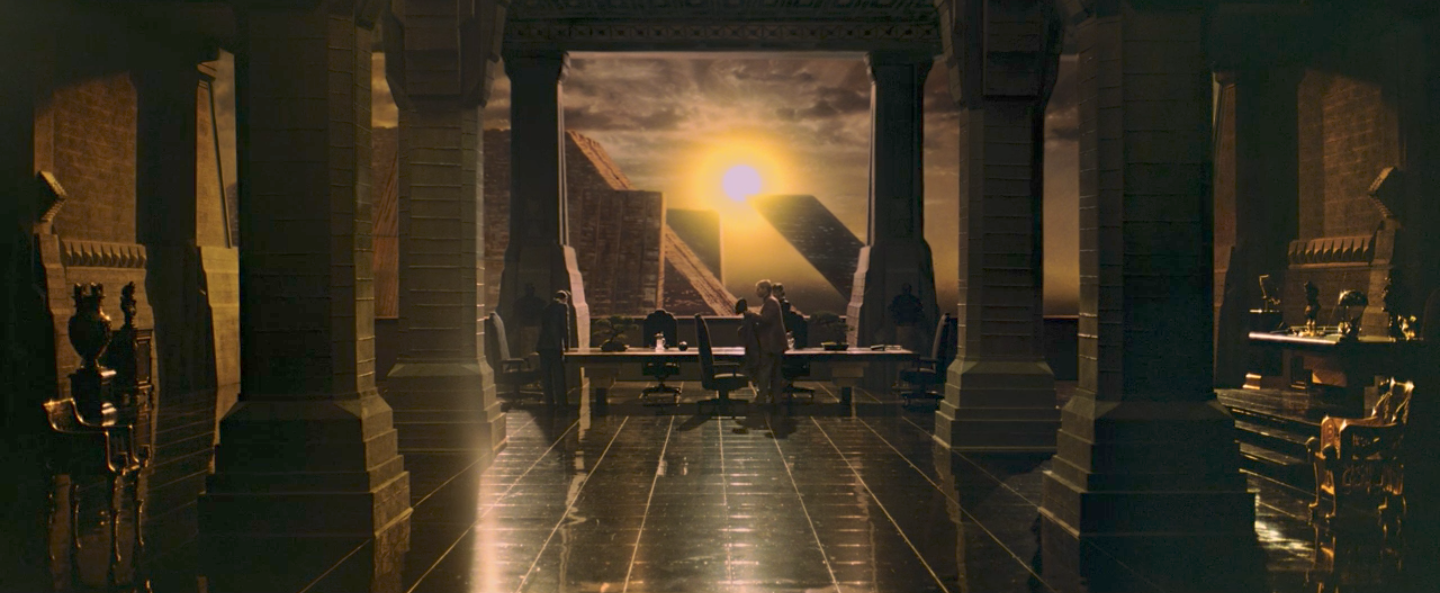
I felt it necessary to add this category for this review, and I may for movies in the future that warrant it as well. The other movies I have reviewed have a very modern vibe to them, and while I wouldn't go so far as to say set design can be ignored, in those instances it is done best when it is invisible. However, an 80's movie attempting to convey the feel of a post apocalyptic 21st century is a TOUGH ask for any studio, and they pull it off! The miniature city they built makes up much of the wide shots, including the image I shared above as well as shots of the Tyrell corporation.
Paull oversaw the huge team effort from many different departments to aid Vangelis in bringing this world to life. Where Vangelis plays the subtle work of and feel and form, the set design visually grabs at your attention and holds you. Despite the consistent bleakness, this world is still alive and I would argue it is a large part of the reason this movie endures the test of time and why this story has a cult following that I am proud to be a part of, and why I will view every piece of Blade Runner material I can get my hands on until I die. 9/10 for these wonderful folk.
Cinematography
The weakest point of this movie unfortunately lies in the cinematography. Cronenweth does a fine job for most of the movie and I do not think he is to blame for it's limitations. Much of this movie pushed the limits of what special effects could convey at the time, and what may have been groundbreaking then has not aged as well as the rest of these other elements. Overall it is still fairly good, and Cronenweth manages to create some truly wonderful shots.
I did want to give special praise to the way he managed to shoot eyes, but more on that in La Tierra de Aguafiestas. Cinematography gets a 7.5/10 for me, which feels cruel for a film I love so much.
Final Thoughts & Overall Rating
A lot of this movie stands the test of time, and a lot of it does not (you'll see Bella's review touch on one aspect that did not age well). But I think accepting its shortcomings as a story (not ignoring them) in favor of the larger question the film proposes is worth doing. The existential horror of this film is what I reflect on most when I think about the movie.
8.5/10, bringing one hell of a world to life.
Beaux Score: "Rape is rape even if she's a robot. Very good colors. Odd vibes. 7.5/10"
¡Tierra de Aguafiestas!
(Land of Spoilers)
In my first watch through of this movie, I distinctly recall it being very easy to see the Replicants as monsters and the Blade Runner as necessary, even while it confronts you with all the amplified sins of humanity; their assumptions and flaws, especially toward its creation.
The film asks a lot of questions from us without giving us any answers to them. The first one being, are these Replicants worthy of the life they are given? They show so little humanity throughout the film, killing indiscriminately to achieve their final goal of speaking with Tyrell, bargaining with their creator for more time. I love the parallels between the Replicants and Tyrell, as a human being facing God. This god is cruel, and made these Replicants to fail, suffer, and die. Roy responds by killing him.
Then we get to the final confrontation with Decker and Roy Batty. Roy toys with our protagonist, wounds him, chases him, makes him feel the fear that he feels every day. He drives him to the edge of death, but ultimately saves him. This is the moment it switched for me and I looked at the Replicants as more than just a machine, but does this mean they are human?
Roy takes this opportunity to speak with Decker about his life, and all that he has seen. These brief descriptions are incomprehensible to us, and yet are so clear. He sits with him, sharing his final moments with the man that was trying to kill him, that has killed his friends. Interestingly enough, he repeats almost verbatim the same things that was already said to Decker by the replicant Leon earlier in the film. But there is so much more to it this time, a sadness in his manufactured soul, a morning of his short life. He reaches out to Decker in this moment because there is no one else to listen, no other chance he has to live. In this final short moment he has left, Roy arguably succeeds and truly lives through the connection that he creates.
I did want to give cinematographer Cronenweth some praise regarding his method for filming some of the character's eyes. Eyes play a big part in the theme of the movie, from its opening shots all the way through it's climax. Many of the replicants of the film have an almost golden glow to them, indicating to the audience what the characters cannot know without interrogation; they they aren't human. This glow was not done in post, but rather a live, onset method known as the Schüfftan Process. While Cronenweth does not get credit for its inception, the method was used quite subtly here to give the replicant characters their signature eye glow.
I loved every time this glow showed up, but also the moments when it didn't. In Roy Batty's final scene, he has arguably the most human moment of the entire film, more than any other character before. In these shots, the glow of the replicant is gone.
Then we have the final question, as to whether Decker is a Replicant or not. I rather like the answer being ambiguous, its answer similarly being meaningless in the context of Tyrell's death and his choice to run away with Rachael. Gaff's words ring in Deckard's ears, the perfect words to end this film on:
It's too bad she won't live. But then again, who does?
 Plot
Plot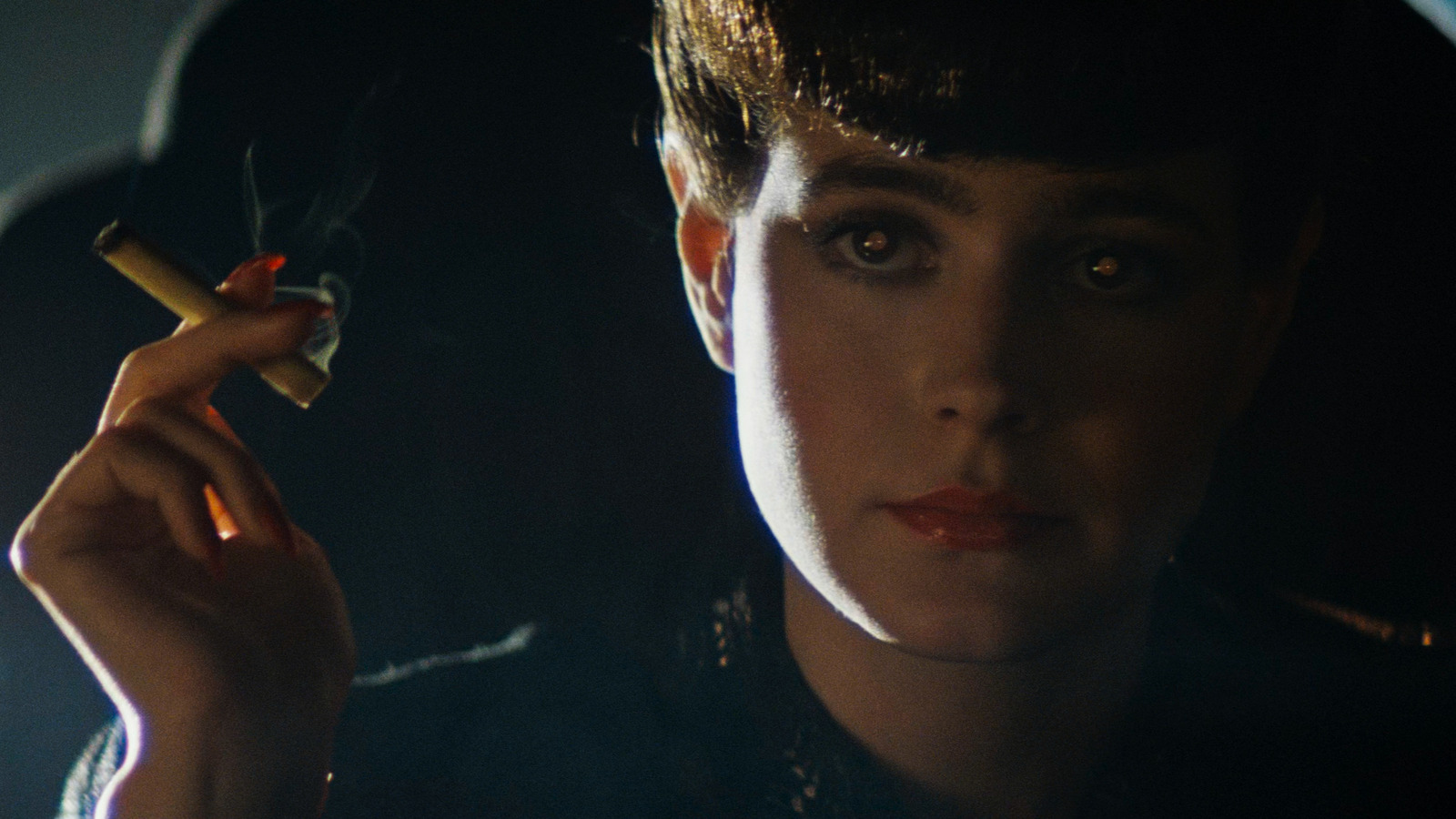


Comments
Post a Comment